Times The Pawn Stars Should Not Have Called In An Expert
Times The Pawn Stars Should Not Have Called In An Expert
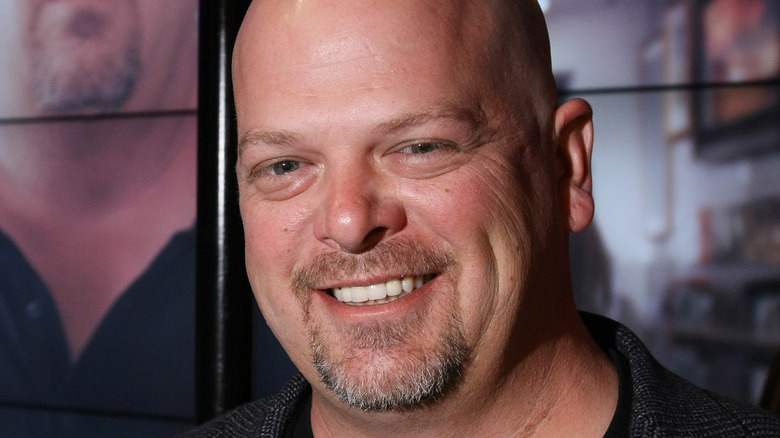
“Pawn Stars,” airing on History since 2009, is among cable’s most successful reality shows, generating hundreds of hours of entertainment from an unlikely source: people trading items for cash at the Gold and Silver Pawn Shop in Las Vegas, Nevada, run by Rick Harrison, Corey Harrison, and the late “Old Man,” Richard Harrison. With great regularity, one of the Harrisons (or Austin Lee “Chumlee” Russell) will find themselves flummoxed by an item a customer is offering for sale, and, not knowing how much to propose to pay for it, they’ll call in an expert in specific disciplines of collectibles to get a more accurate measure of its worth. Usually, the expert on baseball cards, antiques, stamps, musical instruments, or the like is the bearer of bad news, gently explaining that the item isn’t worth nearly what the customer hoped to get in exchange for it.
Once in a while, however, the expert’s estimation will greatly exceed the hopes of the client, turning in an appraisal that forces the Harrisons to pay way more for the item than they’d initially intended. Here are the times when one of the “Pawn Stars” could’ve gotten a steal of a deal if only they hadn’t called in one of their experts.
In the Season 10 “Pawn Stars” episode “Captain Rick,” a man named Jeff entered Gold and Silver Pawn Shop bearing a “really old and hopefully really expensive coin” he found while cleaning out his grandmother’s house. Not quite an ordinary piece of currency, the brassy medallion had a metal loop attached and bore the image of King George III of England, the message “sailed from England 1772” with pictures of “Resolution” and “Adventure” on the reverse.
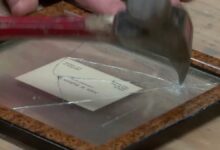
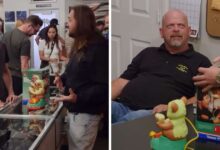
Rick Harrison identifies those as the ships of famed 18th-century explorer and navigator Captain James Cook, who sailed out of England and was one of the first Europeans to set foot in Hawaii and other Pacific islands. Unsure if the piece was actually struck in 1772 or a cheap replica made for gift shops, Harrison calls in David Vagi of NGC Ancients, a local coin expert. Vagi identities the item as being of historical significance. Cook was given 2,000 of these coins, and he was supposed to pass them out to local leaders he encountered in his travels as a “token of esteem.” Jeff’s coin was held and distributed by Captain Cook himself, and Vagi estimated its value at auction at somewhere between $7,500 and $8,500.
Before he came into the shop, Jeff thought he might get a sum in the hundreds, only to accept Harrison’s offer and walk out $5,000 richer.
Evander Holyfield and Mike Tyson are two of the most famous boxers of all time. In 1984, they were both young amateurs just barely getting their careers going when they found themselves in Los Angeles to participate in boxing events at the 1984 Summer Olympics. Holyfield was competing for the U.S. as a light heavyweight, while Tyson was an alternate. The latter was a little despondent, and so a boxing super-fan and highly involved team USA supporter named Bill, as he’d relate on an episode of “Pawn Stars,” took Tyson out to lunch one day in 1984. Bill got Tyson to sign his ticket stub from one of the Olympic matches and then had Holyfield sign it, too.
When Bill presents the double-autographed relic at the Gold and Silver Pawn Shop, he wants $500 for it. Corey Harrison thinks that might be a little, so he calls in Steve Grad, the principal authenticator at Beckett Authentication Services, to verify the item. After analyzing the ink and comparing it to other old Tyson and Holyfield autographs, Grad declares the stub a “winner” and pinpoints its value at around $2,000. Harrison offers Bill $1,000 for the item, but the customer holds firm at $1,500. The two guys reach an impasse, and Bill walks away, deciding to frame the ticket and hang it on a wall instead of selling it.