Now, a new discovery has added another intriguing layer to the legend: a hidden cannon, accompanied by what appears to be stone ammunition. This unexpected find is reigniting debate about what truly happened on Oak Island—and who may have been involved.
Now, a new discovery has added another intriguing layer to the legend: a hidden cannon, accompanied by what appears to be stone ammunition. This unexpected find is reigniting debate about what truly happened on Oak Island—and who may have been involved.
Oak Island has long been a magnet for mystery seekers, historians, and treasure hunters alike.
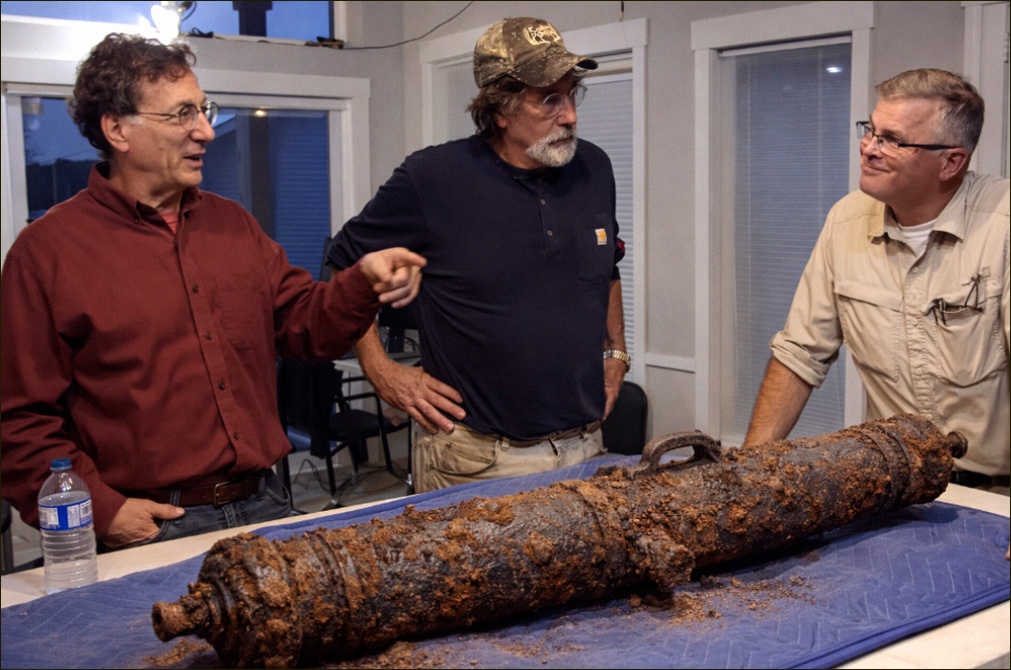
For over two centuries, the small island off the coast of Nova Scotia has been associated with tales of hidden treasure, secret societies, and elaborate underground structures. Now, a new discovery has added another intriguing layer to the legend: a hidden cannon, accompanied by what appears to be stone ammunition. This unexpected find is reigniting debate about what truly happened on Oak Island—and who may have been involved.
The cannon itself is particularly puzzling. Early analysis suggests it may not fit neatly into any previously established timeline connected to the island. Its design appears unusual, raising questions about whether it was used for defense, signaling, or something far more strategic. Even more curious is its concealed location, suggesting it was deliberately hidden rather than abandoned. This implies intent—someone wanted it out of sight, perhaps to protect a secret or to prepare for a threat that never came.
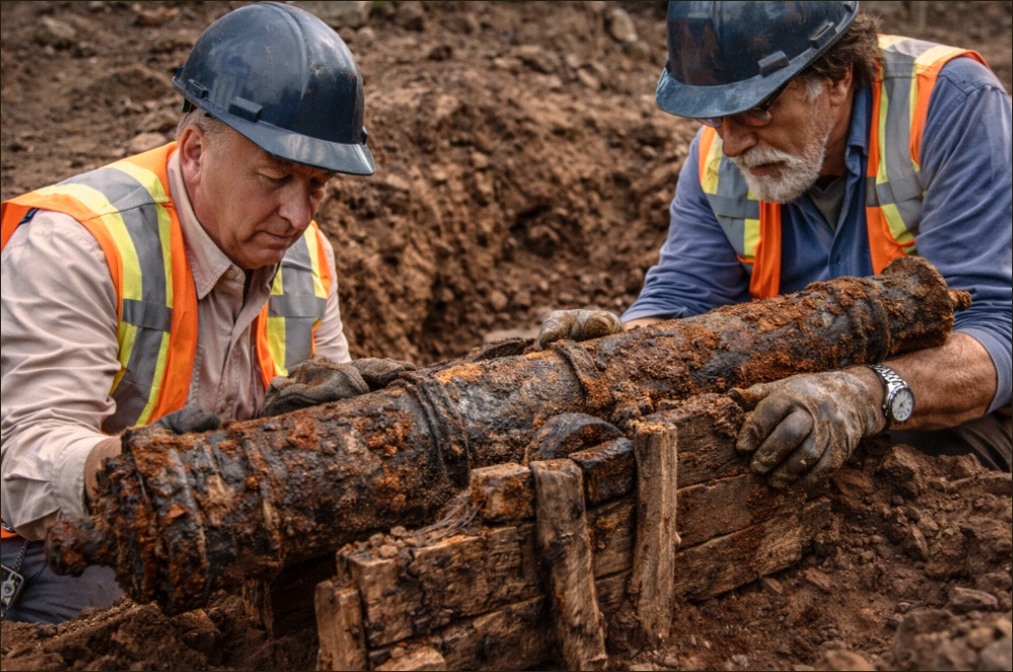
Equally fascinating are the stone projectiles discovered nearby. Unlike traditional iron cannonballs, these stone rounds point to a different kind of weaponry or a different era of use. Some researchers speculate they could date back earlier than previously believed activity on the island, potentially rewriting parts of Oak Island’s history. Others suggest they may have been used in a specialized context, possibly tied to a specific group with unique resources or knowledge.
Together, the cannon and ammunition hint at a scenario far more complex than simple treasure burial. Could Oak Island have once served as a defensive outpost? Was it a staging ground for a larger operation? Or does this discovery point to a hidden conflict that has never been documented? These questions are now at the forefront of ongoing investigations.
What makes this discovery particularly significant is how it intersects with existing theories. For years, speculation has ranged from pirate treasure to lost manuscripts, from military stockpiles to connections with secretive organizations. The presence of weaponry lends weight to the idea that the island may have had strategic importance, rather than being just a hiding place for valuables.




At the same time, the find complicates the narrative. If the cannon was meant for protection, what—or who—was it protecting? And if it was hidden intentionally, why was it never retrieved? These unanswered questions deepen the mystery rather than resolve it.
As excavation and analysis continue, experts hope to uncover more clues about the origin and purpose of these artifacts. Advanced dating techniques and material studies may provide clearer answers in the coming months. Until then, the discovery of the hidden cannon and stone ammunition stands as one of the most compelling developments in Oak Island’s long and enigmatic history.
In the end, Oak Island remains what it has always been: a place where every answer seems to lead to more questions. And with each new discovery, the line between history and legend becomes ever more blurred.