THE UNDERGROUND MAZE: Deep Seismic Scans Map $480 Million Multi-Layer Engineered Network Beneath Oak Island
THE UNDERGROUND MAZE: Deep Seismic Scans Map $480 Million Multi-Layer Engineered Network Beneath Oak Island
THE UNDERGROUND MAZE: Deep Seismic Scans Map $480 Million Multi-Layer Engineered Network Beneath Oak Island
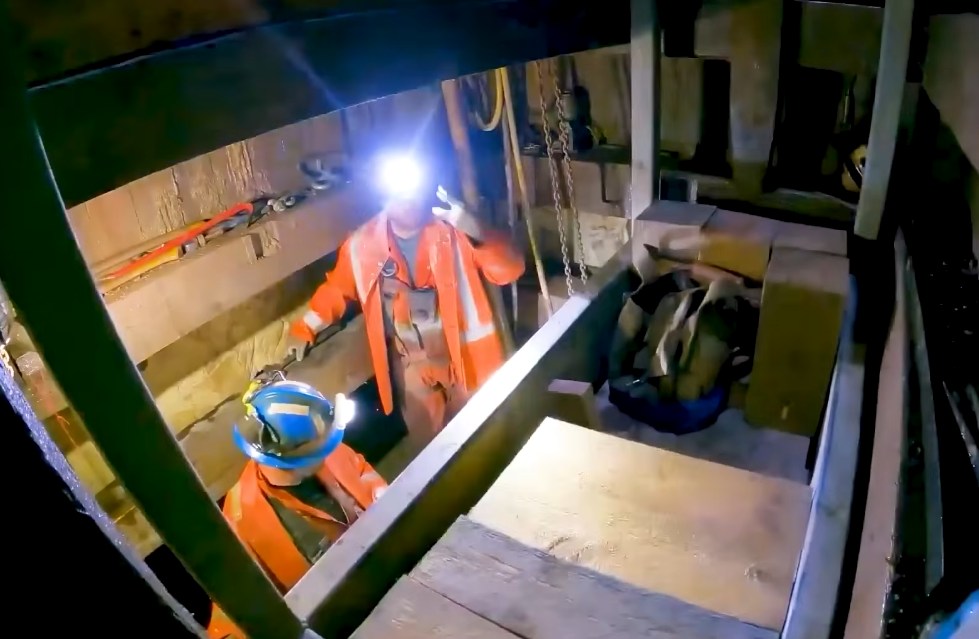
The mystery of Oak Island may have taken its most dramatic turn yet.
In what experts are calling one of the most astonishing developments in the history of the centuries-old treasure hunt, newly completed deep seismic scans have reportedly revealed a vast multi-layer underground network beneath the island—an intricate system of chambers, tunnels, and engineered structures unlike anything previously documented.




The discovery was made during a series of overnight geological surveys conducted near the infamous Money Pit area. According to preliminary reports, the scans uncovered several layers of interconnected passages stretching hundreds of feet below the island’s surface.
What has stunned researchers even more is the presence of multiple large metallic signatures concentrated deep within the network.
Independent analysts reviewing the seismic data estimate that the detected metal deposits could be worth as much as $480 million if confirmed and successfully recovered.
The findings have triggered an immediate escalation of activity across the island.
Witnesses arriving before dawn reported seeing heavy equipment operating throughout the night, additional security personnel being stationed around key excavation zones, and temporary floodlights illuminating large sections of the site.
“It feels like the island has gone into emergency mode,” said one local observer. “I’ve never seen this level of activity before. They’re working around the clock.”
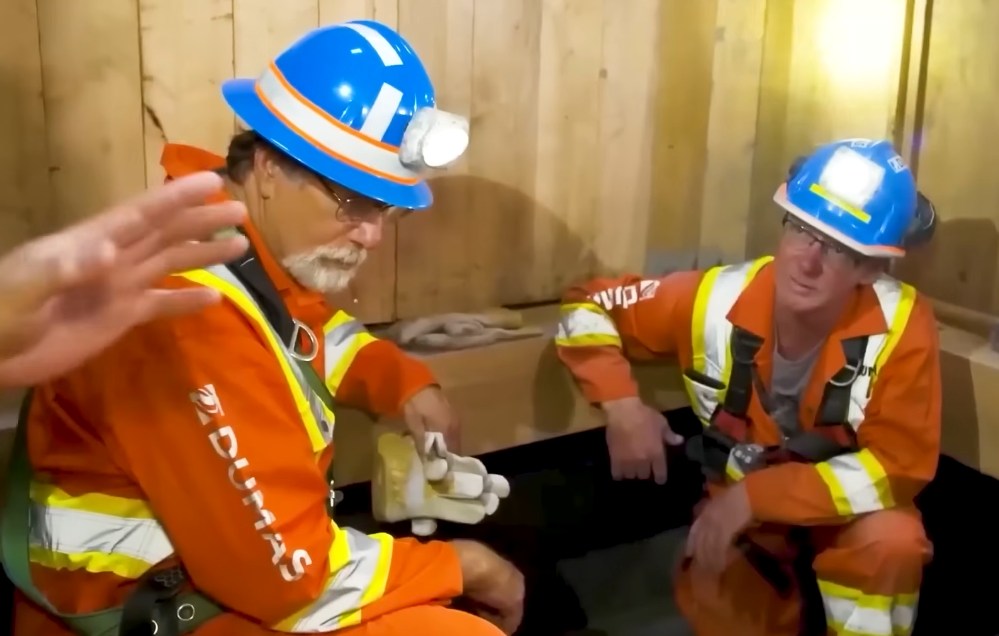
Sources close to the operation claim that daily excavation expenses have now surged to nearly $250,000 per day as crews rush to verify the seismic data.
The enormous cost is reportedly being driven by specialized drilling equipment, advanced imaging technology, and a growing team of engineers, geologists, and safety specialists.
At the center of the excitement is the possibility that Oak Island’s legendary treasure story may finally have a physical target.
For more than two centuries, explorers have searched for evidence supporting theories involving pirate treasure, lost royal artifacts, Templar relics, and hidden historical documents.
Despite countless discoveries—including ancient wood structures, mysterious stone pathways, old coins, and fragments of precious metals—no definitive treasure vault has ever been located.
That may be changing.
The newly mapped underground system appears to be far more sophisticated than natural geology would suggest.
According to early interpretations, several of the detected tunnels intersect at carefully planned angles, while certain chambers appear to be positioned in geometric patterns.
Some researchers believe the layout resembles a deliberately engineered defensive network designed to conceal and protect valuable contents.
“This doesn’t look random,” one geological consultant allegedly involved in reviewing the scans stated. “The arrangement suggests planning. Someone wanted whatever is down there to stay hidden.”
Perhaps most intriguing is the discovery of what analysts are calling the “Central Chamber.”
Located beneath multiple layers of rock and sediment, the chamber is believed to be one of the largest enclosed spaces ever identified beneath Oak Island.
Seismic reflections indicate a concentrated metallic mass at its core.
Although no one has physically reached the chamber, computer models suggest it could contain several large objects grouped together rather than scattered fragments.
That possibility has fueled speculation that explorers may be looking at a deliberately stored cache rather than isolated artifacts.
The Lagina brothers and their team have remained largely silent regarding the reports.
However, crew members were reportedly seen entering a closed-door strategy session shortly after the survey results were delivered.
Several drilling locations have since been marked across the island, while excavation permits are rumored to be undergoing rapid review.
Security measures have also increased significantly.
New fencing has appeared around sensitive areas, and access to certain sections of the island has reportedly been restricted.
The heightened precautions have only intensified public curiosity.
Online communities dedicated to Oak Island exploded with discussion after leaked images allegedly showing portions of the seismic mapping data began circulating.
Some viewers believe the underground layout supports long-standing theories involving the Knights Templar.
Others suggest the structures could be linked to early European explorers or unknown engineering projects dating back centuries.
Skeptics, meanwhile, continue to urge caution.
Experts note that seismic imaging identifies anomalies rather than providing direct visual confirmation.
Metallic signatures can sometimes be misinterpreted, and only physical excavation can determine the true nature of the objects detected below.
Still, even cautious observers acknowledge that the scale of the newly identified network is extraordinary.
If the data proves accurate, the underground maze could represent one of the most ambitious hidden construction projects ever discovered in North America.
For now, drilling crews continue their relentless work beneath the island’s surface.
Massive floodlights burn through the night.
Heavy machinery echoes across the shoreline.
And somewhere beneath centuries of mystery, legend, and speculation, a labyrinth of hidden passages may finally be preparing to reveal its secrets.
Whether the discovery leads to an unimaginable treasure, a forgotten historical archive, or an entirely new chapter in the Oak Island story, one thing is certain:
The world’s most famous treasure hunt has entered a new and potentially historic phase—and all eyes are now focused on what lies at the heart of the underground maze.