Legends, Clues & Conspiracies | The Curse of Oak Island
Legends, Clues & Conspiracies | The Curse of Oak Island
Legends, Clues & Conspiracies | The Curse of Oak Island

For more than two centuries, a small island off the coast of Nova Scotia has captured the imagination of treasure hunters, historians, and conspiracy theorists alike. Known as Oak Island, this quiet patch of land in Mahone Bay hides one of the world’s most enduring mysteries. Beneath its soil may lie lost treasure, ancient secrets, or perhaps nothing more than an elaborate legend. Yet the story of Oak Island is not just about treasure—it is about clues, strange discoveries, and a curse that many believe still lingers over the island.
The mystery began in 1795 when a young man named Daniel McGinnis noticed something unusual while exploring the island. Beneath a large oak tree, he saw a circular depression in the ground and evidence that the earth had once been disturbed. Curious, McGinnis returned with two friends and began digging. What they found sparked a legend that would last for centuries.
As they dug deeper, the young men discovered layers of wooden platforms buried every ten feet. These carefully placed logs suggested that the pit had been deliberately constructed. The deeper they dug, the stranger the discovery became. It appeared that someone had engineered a complex underground structure. This mysterious shaft later became known as the “Money Pit.”
Word of the discovery spread quickly, and soon treasure hunters from across the region arrived to continue the excavation. Over the years, many groups attempted to reach the bottom of the Money Pit. However, the deeper they dug, the more complicated the mystery became. At around ninety feet below the surface, diggers reportedly discovered a stone slab carved with unusual symbols. Some researchers later claimed the symbols formed a message that read: “Forty feet below, two million pounds are buried.”




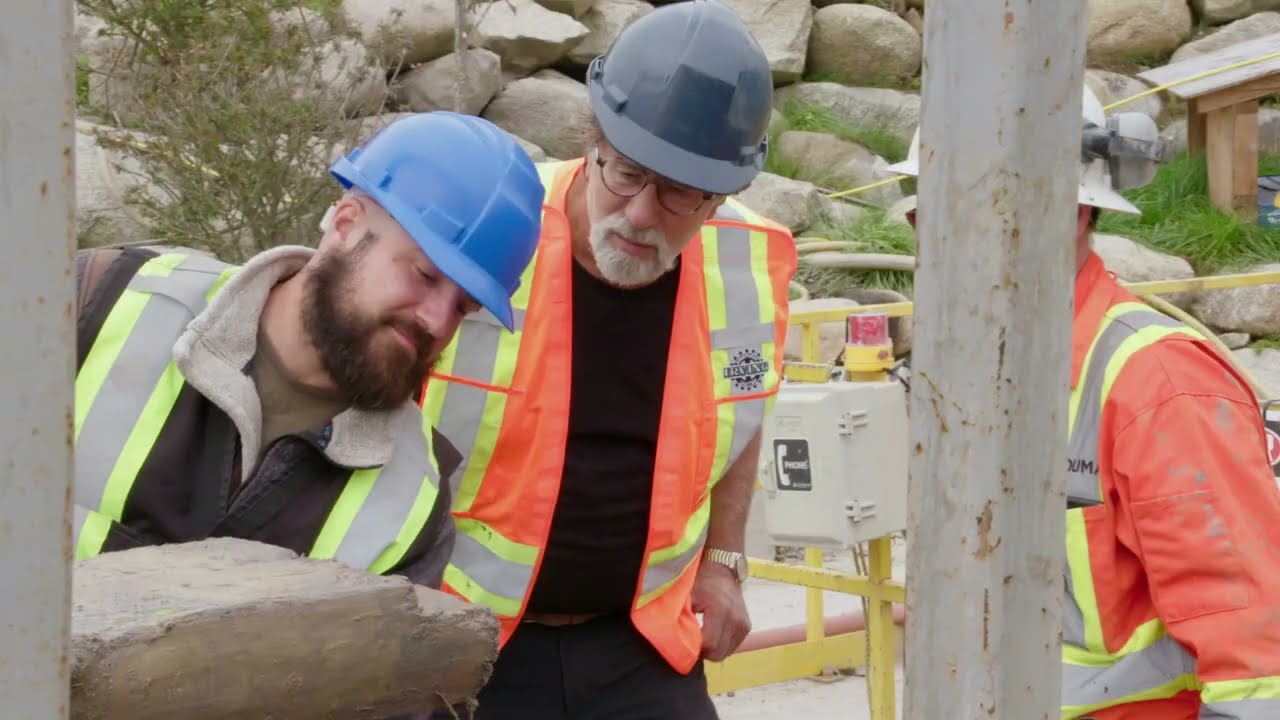
Whether the translation was accurate or not, the story fueled even greater excitement. Investors funded large expeditions, engineers built complex drilling systems, and the island became a magnet for fortune seekers. Yet every attempt seemed to end in failure. Flood tunnels suddenly filled the pit with seawater, collapsing walls destroyed excavation shafts, and equipment malfunctioned in strange ways.
These repeated setbacks gave rise to one of the island’s most famous legends—the curse of Oak Island. According to the story, seven people must die before the treasure can be found. Over the years, several explorers have indeed lost their lives while searching the island, reinforcing the eerie belief that something supernatural protects whatever lies beneath.
Beyond the curse, Oak Island has also become the center of countless conspiracies. Some believe the treasure was hidden by pirates, possibly the legendary Captain William Kidd. Others argue that it may contain the lost jewels of Marie Antoinette, secretly transported across the Atlantic during the French Revolution.
Another theory suggests the island may hold ancient religious artifacts. Some researchers believe that members of the Knights Templar traveled to North America centuries before Columbus and hid sacred relics there, possibly even the Holy Grail or secret religious documents. According to this theory, the complex design of the Money Pit—with its flood tunnels and wooden platforms—could represent advanced engineering meant to protect something extremely valuable.
There are also theories linking Oak Island to the works of William Shakespeare. A few historians believe hidden manuscripts or evidence of secret authorship might lie buried on the island. Others claim the island may contain treasure from Spanish galleons or even ancient civilizations that reached North America long before recorded history.
Despite centuries of speculation, modern technology has not yet solved the mystery. Ground-penetrating radar, deep drilling equipment, and underwater cameras have been used in recent years to explore the island’s underground structures. These tools have revealed intriguing anomalies—possible tunnels, metal objects, and buried chambers—but no definitive treasure has been uncovered.
However, the search itself has become part of the legend. Generations of explorers have devoted their lives and fortunes to unlocking Oak Island’s secrets. Each discovery, whether a piece of old wood, a fragment of pottery, or a mysterious coin, adds another clue to the puzzle.

What makes Oak Island so fascinating is the mixture of fact and folklore. Some evidence clearly shows that large-scale digging and construction occurred there long ago. Yet who built these structures, and why, remains unknown. Was it pirates hiding stolen gold? Secret societies protecting ancient relics? Or could it be a natural geological formation that simply created the illusion of human engineering?
The mystery continues to inspire new investigations and documentaries, bringing global attention to the island. Each season, researchers uncover new clues that seem to bring them closer to the truth, yet the final answer remains just out of reach.
Perhaps the greatest treasure of Oak Island is not gold or jewels but the mystery itself. The island represents humanity’s endless curiosity—the desire to explore the unknown and uncover secrets hidden beneath history.
Until the day the final chamber is opened, Oak Island will remain a place where legends, clues, and conspiracies intertwine. Whether the treasure is real or not, the story has already become one of the greatest treasure hunts in history, proving that sometimes the search for the truth is more powerful than the treasure itself.